Showing posts with label Obscura Egypt. Show all posts

Saturday, April 25, 2026

The Land of Abraham and Sons: Why Ramesses II can not be and can be “the pharaoh of exodus”- Islamic Edition

On Wednesday, Egypt’s Ministry of Tourism and Antiquities announced that an Egyptian archaeological mission had uncovered a massive ancient statue at the Tell El-Faraoun site in El-Husseiniya, Sharqia Governorate.

The statue is believed to depict King Ramesses II of Ancient Egypt’s New Kingdom.

Carved from pink granite, it was found missing its lower half, including the legs and base.

Despite its incomplete state, archaeologists say the surviving features clearly point to royal iconography associated with Ramesses II.

The remains of the statue found at the location  "SCA"
The remains of the statue found at the location 
"SCA"

According to the Supreme Council of Antiquities (SCA), the discovery offers new insight into royal and religious life in the eastern Nile Delta. 

Initial studies suggest that the statue may not have originally stood at Tell El-Faraoun. Instead, it was likely transported in antiquity from Per-Ramesses—the royal capital during Ramesses II’s reign—to the site, known in ancient times as Imet, where it may have been reused within a religious complex.

The excavation site at Tell El-Faraoun in Sharkia governorate  "SCA"
The excavation site at Tell El-Faraoun in Sharkia governorate
 "SCA"

I hesitate to say it, but such archaeological announcements have become almost routine in Egypt these days, appearing every few days. 

What I did not expect, however, was for this particular discovery to attract widespread attention and go viral—until a report by the Daily Mail the following day reframed the narrative.

Thursday, April 2, 2026

It is not a “Mexican filter”, it is a Khamaseen sandstorm.

Egypt was struck by a massive African sandstorm, commonly known in Egyptian history and tradition as the Khamaseen.

Today, Generation Z jokingly refers to it as a “Mexican filter.”

Khamaseen sandstorms were recorded in ancient Egypt under the name “Resut,” or “south wind,” and were associated with Set — the lord of the desert, chaos, and storms. Yes, the same Set from the myth of Isis and Osiris, where Osiris was the lord of the Nile and the fertile valley.

The Pyramids of Giza during the storm on Thursday 
Ibrahim Kandel 

They are mentioned in the Book of the Dead, where the south wind is described as “the breath that burns the lungs,” prompting the use of protective amulets or prayers to Thoth, the god of wisdom and knowledge, to temper Set’s ferocity.

But why were they called “south winds” when they often seem today to come from the west, sweeping in from the Sahara?

Saturday, July 26, 2025

Egyptian X-Files : Tut’s Grasshopper, the Qatari Prince and Apollo "‘Updated"

It won’t be the first time, nor will it be the last—but raising awareness is still worthwhile.

On 27 July at 1 PM GMT, the Apollo Art Auctions showroom in Central London will host the second day of a unique and highly controversial auction, both in person and online.

The sale features ancient artefacts from a private collection long associated with the shadowy world of the underground antiquities market.

The first day of the auction, held on 26 July at 1 PM GMT, showcased artefacts from Medieval, Asian, South American, and Western Asiatic cultures. But the second day is the real centerpiece.

On both days, a total of 953 lots to be auctioned. Day 1 included 434 lots while Day 2 included 519 lots.

Out of the total 894 lots, 297 lots are from ancient Egypt, making it the largest representation among all civilizations and cultures covered in the auction. The overall average starting price of Ancient Egyptian artefacts is £4,00.

This is a controversial auction by all accounts, focusing on a selection of ancient artefacts from the Prince Collection—described in Apollo’s catalogue as “a private collection assembled over many years, with attention to historical context, craftsmanship, and provenance.”

The auction brochure emphasizes that the second day’s lots represent a “thoughtfully selected” group of antiquities from the Egyptian, Greek, and Roman worlds, with particular focus on “the lasting cultural impact of ancient Egypt.”

The crown jewel of the auctioned Prince Collection is Lot 112—listed as Lot 462 in the Apollo Art Auction.

According to the auction’s brochure, lot 462 is “Egyptian Ivory and Wood Cosmetic Vessel in the Form of a Grasshopper, believed to be (among the known and potential strays from the tomb of Tutankhamun), and once part of the collection of the late Howard Carter.”

The alleged King Tut's grasshopper
The alleged King Tut's grasshopper 

You read it right, an artefact from King Tut’s tomb. It was the reason why the official name of the auction is ‘Fine Ancient Art – The Prince Collection – The Legend of Tutankhamun’ auction.

Updated : the grasshopper was sold for £340,000 ( LE 22,507,884.40) on Sunday.

Wednesday, July 5, 2023

Kodak Agfa presents: Egypt’s Spring Flowers Fair 2023 at the Agricultural Museum

Usually, the Ministry of Agriculture holds the annual Spring Flowers Fair from March to April. However, this year, the fair was neither held on time nor in its usual location.

To the surprise, or rather shock, of its regular visitors, the Ministry of Agriculture announced that the Orman Botanical Garden would be closed for renovations right after the Ramadan supplies exhibit in March.

The closure of the Orman Botanical Garden for a major renovation operation has raised concerns among many, including myself.

This renovation also includes the oldest Zoo in Africa and the Middle East, the Giza Zoo. According to reports in the Egyptian media, the renovation process, which is led by the Military Production Ministry and a consortium of foreign companies, is expected to take a year and a half.

This situation is so alarming that it has left me feeling depressed to even speak about it. According to Al-Shorouk Newspaper, both the Orman Botanical Garden and the Giza Zoo will remain open until July 9th before they are closed for renovations to become "One Grand Zoo."

The government cannot close the Giza Zoo during Eid because it is the main attraction for Egyptians during the Eid Adha holiday, and thousands of people from all over the country visit it during this time.

I, along with others who fear losing the zoo as we know it, visited it in the winter. The zoo holds a special place in the hearts of all Egyptians with its classical historical look.

I was hoping to visit Orman Garden during the Spring Flowers Fair, but for the first time in decades, the fair was not held there.

Initially, I believed the fair had been cancelled due to ongoing renovation works and the economic crisis, which had affected imports in Egypt. However, I was mistaken.

It turned out that the fair was indeed held but in a different location.

The 90th Spring Flowers Fair took place at the Agricultural Museum in Giza from May 27th to June 27th, running from 9 AM to 9 PM. The video tour of the fair is at bottom of this post, so yes you must read it to the end. 👼

At Egypt's Spring Flowers Fair 2023 at the Agricultural Museum
The Spring Flowers Fair 2023 was held at Egypt's Agricultural Museum in Giza 

According to the Ministry of Agriculture, the 90th edition of Egypt's longest-running fair saw the participation of over two hundred exhibitors.

The fair displayed more than 1,000 types of plants, including flowers and fruit trees.

At Egypt's Spring Flowers Fair 2023 at the Agricultural Museum
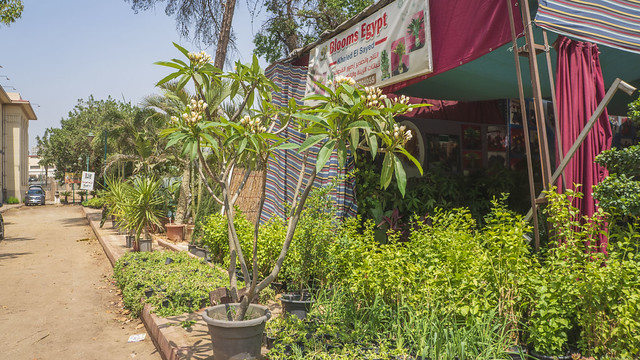
Jasmine tree sold at a partition inside Egypt's Spring Flowers Fair 2023

One would expect the Ministry of Agriculture or the government to have promoted the fair more, especially considering it was the 90th edition.

Thursday, March 30, 2023

From Nile Floods to Ramadan Celebrations: Exploring the History of Cairo's El-Sadd El-Barani Street

If you are a veteran Egyptian Chronicles blog reader who has not got bored of my rants, you will know that in Ramadan I got some traditions like fewer politics, more of 1001 posts and the usual as well as annual trip to the Ramadan lanterns market at Cairo’s El-Seyada Zeinab.

It is an annual tradition which I love, and I hope that insh Allah I continue doing it.

Now there has been something that puzzled me concerning that market. It was one question that I have not yet had a definite answer to.

When or how did the Ramadan market start in El-Sadd El-Barani Street!?

My online research led me to the history behind El-Sadd El-Barani Street and that is what I share in the video below.

While ranting about what I discovered, you can see how packed the Ramadan lanterns market was despite the economic crisis. I filmed this on 15 March. 

I believe that people especially from the working and middle classes want to celebrate Holy Month and its traditions despite the truly hard economic conditions.

At Cairo's Ramadan market in El-Seyada Zeinab
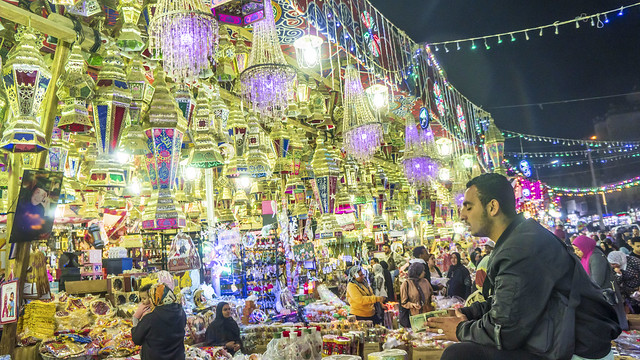
The Ramadan Market at El-Sadd El-Barani street 

Historically and officially, the name "El-Sadd El-Barani Street" first appeared in modern Egyptian official records in 1898 when the Cairo Municipal authorities decided to backfill the "Egyptian Gulf".

 This gulf was an artificial water canal utilized to link the Nile River with a lake that served as a means of preserving the Nile flood's excess.

Monday, March 20, 2023

Exploring Egypt's Wadi El-Hitan and Fossils and Climate Change Museum: In video

I know. I promise you that this would be the finale of the posts series I dedicated to the visit I paid to Egypt’s Wadi El-Hitan or the Valley of the Whales in 2017.

Believe me, this obsession is worth it, the place is amazing and having this place in Egypt makes me so proud.

Now here are a couple of video clips I took at the UNESCO World Heritage Site in the heart of the Fayoum desert which is 150 km away from Cairo. Warning: Extremely shaky, fast and short video. Turn on the captions, it got English captions and I am working on the Arabic captions as well.

I apologize for the bad filming; I was still a newbie. 

If you like it, please like, share and subscribe because I still record videos of places I visit. “You probably know that already if you are a regular here.”

Featured in the video are Wadi El-Rayan’s man-made waterfalls and the man-made magic lake.

Monday, January 23, 2023

Kodak Agfa Presents : Egypt’s Fossil and Climate Change Museum in Fayoum’s Wadi El-Hitan Protectorate in 2017 (#EP3: When the desert turns into a museum)

We are back in the third post of our series about Egypt’s Wadi El-Hitan Climate Change Museum in Fayoum.

In 2017, I paid a visit to Wadi El-Hitan or the Whale valley in a quick visit to the beautiful Fayoum governorate. In the first post of this series, we shared the history of Egypt’s fossilized Jurassic Park as well as part of its indoor museum.

In the second post, we continued our visit to the very rich indoor museum in the valley.

Now we continue our trip in this post to the UNESCO World Heritage Site but this time we visit the outdoor museum.

Wadi El-Hitan protectorate and open Museum in Egypt's Museum
Inside Wadi El-Hitan Protectorate in Fayoum's desert 

When you finish visiting the indoor museum, you go outside carrying your backpack or whatever but you must have a bottle of water to keep you hydrated and must wear your best hiking shoes because you will have one hell of a hike in the middle of the desert.

You will see why. 

Wadi El-Hitan protectorate and open Museum in Egypt's Museum
Inside Wadi El-Hitan Protectorate in Fayoum's desert 

Head for the trail in front of you and just imagine that this was a huge ocean bed from millions of years ago.

Wadi El-Hitan protectorate and open Museum in Egypt's Museum
The road to the outdoor museum and its exhibits from fossils 

The trail takes you up to a hill and seriously it is one of the best hikes I have ever taken so far.

Saturday, October 29, 2022

Kodak Agfa Presents: Egypt’s Fossil and Climate Change Museum in Fayoum’s Wadi El-Hitan Protectorate in 2017 ( #EP2 : When the desert was a forest )

It is the second episode in Kodak Agfa’s series of Egypt’s Fossil and Climate Change Museum in Fayoum’s Wadi El-Hitan protectorate in 2017.

In the first episode or part, we checked quickly the history of Egypt’s Wadi El-Hitan protectorate and its very fossil and climate change Museum in the heart of Fayoum’s desert. We also knew a lot about when whales swam and walked the land of Fayoum tens of millions of years ago or in other words when the desert was a part of a vest ocean.

I think it is a reason to reshare the famous Fayoum UFO because it is so beautiful.

Egypt's Fossils and Climate Change Museum in Fayoum
Fayoum's Fossil and Climate Change Museum aka Fayoum UFO 

Now this post is more about when the desert of Fayoum was a huge forest and dinosaurs roamed the earth but before that, I have to share with you a couple of photos I forgot to share with you when the desert was an ocean.

I know that it is out of focus and I could not fix it for real in those new online AI editing apps but I can’t ignore that full skeleton of Hitan Sea Cow aka Sirenia.

Hitan Sea Cow skeleton at Egypt's Fossil and Climate Change Museum
Hitan Sea Cow skeleton

Egypt’s Hitan valley had its own version of Sea Cow aka Hitan Sea Cow.

Hitan Sea Cow is the great grand ancestor of the dugong. That late Eocene mammal was found by the famous expedition of the Michigan University in Wadi El-Hitan.

Sunday, October 2, 2022

Kodak Agfa Presents: Egypt’s Fossil and Climate Change Museum in Fayoum’s Wadi El-Hitan Protectorate in 2017 (#Ep1: When the desert was an ocean)

Kodak Agfa has not finished the Fayoum series. After all who would have thought that one quick-day trip to the Wadi El-Rayan protectorate would yield all those photos.

We stopped last time in Fayoum at its Magic Lake and its surrounding area. Now it is time to visit Fayoum’s crown jewel and its UNESCO World Heritage Site: Wadi El-Hitan.

A quick intro to Wadi El-Hitan: 150 km away from Cairo, Wadi El-Hitan which means in Arabic “Whales valley” is a paleontological site which hosts hundreds of whale fossils and other creatures from millions of years ago. Warning: This post is like a return back to a geology class but it is worth it.

Now Egypt’s Whale Valley is an extremely important paleontologically and historically site because it solves one of the biggest mysteries concerning the evolution of whales.

Unlike what you think, from 50 million years ago Earth’s most giant mammals aka the Whales were actually on-land animals that used to walk on legs before becoming giant gigantic mammals living in oceans.

Between 45-30 million years ago during the Eocene epoch, whales began their transition from on-land animals to Swimming big fishes as the world’s temperature was extremely high in its beginning and then cooled down by its end.

Among all the places, Wadi El-Hitan has the largest collection of whale fossils from that era as well as other animals and fishes in an amazing way considering the fact, we are speaking about a desert now.

If you do not know from millions of years ago the great Sahara including Egypt’s Western desert was part of a huge ocean and due to climate change “evidence for those deniers” we got this dry huge desert reminding us of what can happen again

The first whale fossil was unearthed in Wadi El-Hitan in 1902 and for 80 years there had been no serious excavation due to the difficulty to reach the site. In the 1980s, with the emergence of 4x4 safari trips to the site, more foreign Western Universities began to put an eye on that site.

In 1989, Egypt declared the area of Wadi El-Rayan a natural protectorate. Already Wadi El-Hitan is located inside it so it has been part of a protectorate then.

According to news investigative reports during the time of Mubarak, Egypt’s Western desert especially Fayoum dinosaurs and pre-history creatures haven for years Western Universities like Michigan University.

In 2005, UNESCO announced Wadi El-Hitan as World Heritage Site. It is the first Natural World Heritage site in Egypt. In 2008, it was officially inaugurated as an open museum.

Egypt's Fossils and Climate Change Museum in Fayoum
Egypt's Fossil and Climate Change Museum's open area 

Now the amazing site got two museums: The open-air Museum and the Fossil and Climate Change Museum.

In January 2016, Egypt inaugurated the Fossil and Climate Change Museum inside the Wadi El-Hitan protectorate.

Wednesday, November 10, 2021

Kodak Agfa Presents : Some of Princess Fawzia’s Jewelry at Alexandria’s Royal Jewelry Museum in photos

On 5 November From 100 years ago, a baby girl was born in Alexandria, Egypt.

She was born as a true real living princess, her father was a king of one of the greatest and oldest kingdoms in the East. Like in a fairy tale, She was a stunning beauty.

After her father’s death, her eldest brother became the king.

Soon she also married a crown prince of another great Eastern kingdom. In a couple of years, that crown prince became his country’s King or rather Shah and she became the queen.

You would think that she would live happily ever after just like in Disney’s films for princesses yet the reality is different from fiction and late Princess Fawzia Fouad of Egypt knew that first hand.

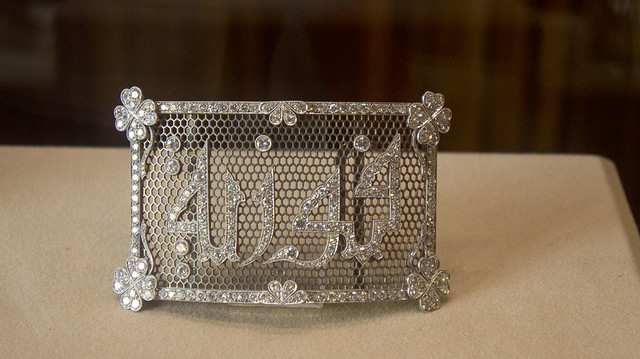
Princess Fawzia's Diamond hairpin at Royal Jewelry Museum
A hairpin made of diamonds with the name of Princess Fawzia in Arabic 

Now on this occasion, I would like to share this collection of jewelry that was owned by the former Queen of Iran at Alexandria’s Royal Jewelry Museum.

Late Princess Fawzia in late 1940s
Late Princess Fawzia in the late 1940s 

Yup, there is a jewelry collection of Egypt’s legendary sad beauty Princess Fawzia Fouad at this often forgotten less-known yet wealthy museum.

Tuesday, August 24, 2021

Kodak Agfa Presents : The Royal Taxidermy and Hunting Museum

This post was planned for the occasion of Egypt’s National Day aka 23 July Coup/Revolution/Movement “Whatever you prefer” as Kodak Agfa would like to share with you those couple of photos taken in summer 2019 but time was not that friendly.

It ended up posted a month later!!

If you are into bizarre-stuff-niche museums with a little dark twist, then you will like this post. 

If you are into hunting and animal taxidermy, then this is your place.

Gazelles shoulder mount taxidermy at the Royal taxidermy

This post is about the Mohamed Ali Taxidermy and Hunting Museum or as officially known “Royal Hunting Museum”.

This place is in the Prince Mohamed Ali Tawfik Estate at Cairo’s Al-Manial island which I visited with a group of friends in August 2019.

We already visited its beautiful small mosque and saw how much the eccentric prince who could have been a king was influenced by Islamic architecture especially in Andalusia.

Our next stop in this big estate that looks like a small oasis inside the buzzing Cairo is the Royal Hunting Museum or Mohamed Ali taxidermy museum. “I hope its trees survive the trees massacre still going on across the country”

Water Buffaloes shoulder mount taxidermy and a goose taxidermy at Mohamed Ali taxidermy museum
Water Buffaloe's shoulder mount taxidermy and goose taxidermy
 at the Royal taxidermy museum

First, I apologize for the bad photography as the lighting in the Museum is not camera friendly. There are out of focus photos too. 

I thought at first this is the personal collection of Prince Mohamed Ali Tawfik and that building where he used to taxidermize those poor animals he hunted and collected.

This made me think that he would be more eccentric than he was already.

But I was mistaken.

That small building located near the mosque did not exist before the 1960s. It was not part of the original buildings in the estate, nor it was commissioned by Prince Mohamed Ali Tawfik.

Wednesday, March 31, 2021

Kodak Agfa Presents : Bahariya Oasis Heritage Private Museum

In February 2019, Kodak Agfa went on a short trip to the amazing and wonderful Bahariya Oasis of Egypt. Despite it follows the Giza governorate officially yet it is considered in the heart of the Western desert or rather we can consider it the gate of the Western Desert and its oases 

Interestingly the Bahariya Oasis is known in Egypt as Bahariya Oases and not only One oasis.

There are sites many sites and places I have been on this short trip including the city of Bawiti where I have been staying but I will kick it off with this small private museum I have been to hours before going back to Cairo.

That small private museum is the Bahariya Oasis Heritage. 

Bahariya Oasis's heritage museum in Egypt's Giza
The Bahariya Oasis Heritage Museum from outside

This small privately-owned and operated museum is dedicated to the heritage, culture and history of the Bahariya Oasis, which is actually quite a mysterious place for the majority of the Egyptians from the valley of the Nile.

It is not your usual museum where you can find a collection of old artefacts but rather it is a heritage and art museum.

Wednesday, February 17, 2021

Kodak Agfa presents : Fayoum’s Magic Lake 2017 in photos

This is the third post in a series of posts featuring my short visit in 2017 with my family to the amazing Fayoum governorate. "Warning: The photos may not be the best"

The first post in the series featured Lake Qaron aka Lake Moeries while the second post featured the Wadi El-Rayan waterfalls.

Now, this post is dedicated also to another amazing place in the Wadi El-Rayan protectorate.

We have not finished yet this protectorate.

Our next stop on that trip was at the Magic Lake region.

Wadi El-Rayan's Magic Lake in Egypt's Fayoum
This is the Magic lake region

Yes, the Magic lake region is its name and it is one of the most beautiful places in Egypt by far.

Thursday, August 20, 2020

Kodak Agfa Presents : Prince Mohamed Ali Palace's Mosque and Clock Tower

First of all, Happy new Hijri year 1442 to all Muslims around the globe.

I hope that year 1442 would better inshallah for the whole world.

On this occasion, I would like to share with you couple of photos I took while visiting the Prince Mohamed Ali Palace or rather an estate or El-Manial Palace as commonly known last August with a group of friends in Cairo. 

Built from 1899 to 1929, El-Manial Palace was designed by Prince Mohamed Ali Tawfik “1875-1955”, King Farouk’s Uncle and it is considered one of the best-preserved remaining palaces form the Mohamed Ali Royal Family era.

The Prince Mohamed Ali Palace or rather estate is so big and a good many interesting attractions. Interestingly, this huge piece of land was originally owned by Prince Mohamed Ali Tawfik's great Uncle Prince Fadel.

Prince Fadel had a mosque named after him in El-Sayida Zeinab.

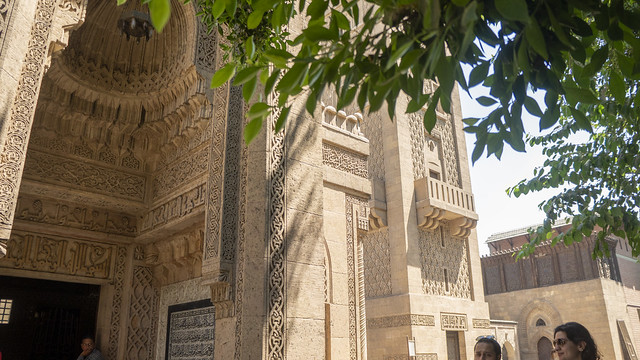
Outside Egypt's Prince Mohamed Ali Mosque in his Palace Complex in Cairo
Prince Mohamed Ali Tawfik's Mosque in his Cairo estate

This time the photos are the for the Prince  Palace’s Mosque and its clock tower.

The younger brother of Khedive Abbas Helmi II built a mosque in his estate and it is a very beautiful small mosque. Prince Mohamed Ali Tawfik and his staff in his estate used to pray in that mosque

Wednesday, July 15, 2020

Kodak Agfa presents : Fayoum’s Wadi El-Rayan waterfalls in photos

This is my attempt to revive Kodak Agfa, especially it seems that Coronavirus is still there.

This is the second post in a series of posts featuring my short visit in 2017 with my family to the amazing Fayoum governorate. "Warning: The photos may not be the best" 

The first post featured Lake Qaron aka Lake Moeries; which has been one of the most famous landmarks in the governorate for decades but it met a competition in a recent couple of decades.

This competition is represented in Wadi El-Rayan and Wadi El-Hitan protectorates.

Wadi El-Hitan is already part of Wadi El-Rayan as far as I know.

First waterfall in Egypt's Wadi El Rayan protectorate
Wadi El-Rayan waterfall in Fayoum in 2017

The valley of El-Rayan or Wadi El-Rayan in Arabic got a lot of interest places and lots of interesting tales.

Its first tale is related to its name “Wadi El-Rayan”.

I did not understand the meaning at first because El-Rayan in Arabic means “watered” and it is not a green valley per se.

Inside Egypts Wadi El-Rayan protectorate in Fayoum
Desert road leading to Wadi El-Rayan in 2017

If you think it is strange because it is a desert valley named “El-Rayan”, wait to know until you know the rest of the tale.

According to local history, the Arab tribes and nomad in that area “and they are many across the Western desert and present a considerable percentage in the local population in the area.” named a desert valley after the name of King El-Rayan Ibn El-Walid.

This king allegedly lived for a while in the region along with his army depending on wells as a source of water as there were no waterfalls in the past or vast lakes. “Yeah, you read it right and this is another tale here”

So who was that El-Rayan Ibn El-Walid or El-Rayan son El-Walid !? No, he was not an Arab ruler who came to Egypt during the Arabic conquest in the 7th century.

He was actually a famous ancient Egyptian King if not one of the most famous Egyptian rulers in the “alternative popular ancient Egyptian history.”

Sunday, June 28, 2020

Kodak Agfa presents : Cairo’s Nilometer and Manasterly Palace from Egypt’s Nile River

This is not a long Kodak Agfa tour but rather a very short one.

As we are talking about the Nile River nowadays considering the fact that Ethiopian officials are insisting to go on unliteral action and fill the Grand Ethiopian Renaissance Dam, I decided to dedicate more posts about the Nile River and its cruises which I enjoyed.

In March 2017, I was in a family Nile cruise when we passed by the famous Cairo’s Nilometer at the far South tip of Rhoda Nile island.

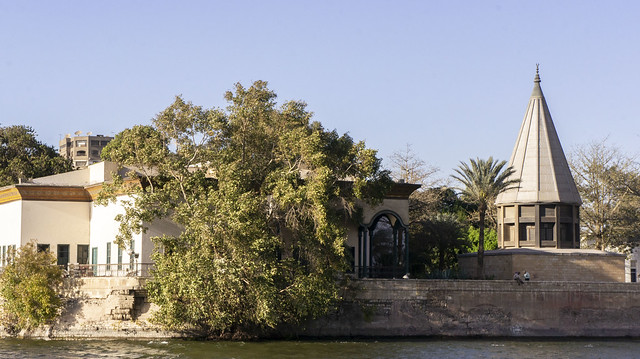
Egypt's Nilometer and Manasterly palac
Egypt's Nilometer and Manasterly palace

The Cairo Nilometer is on the right of the photo.

This Nilometer is one of the oldest Islamic era and Umayyad-era buildings or monuments that had remained despite all the Caliphate, Kingdoms and capitals that followed in Egypt.

I think its location on a Nile island and its role as Nilometer made it survive all that time.

This is a little monument that survived a millennium shows the importance of the Nile to the Egyptian people and its economy.

Historically, the first Nilometer in this location was built in the Umayyad caliphate during the rule of Caliph Al-Walid-I in 715 AD.

It was reportedly re-designed and reconstructed to its current shape a hundred-years later by none other than famous Abbasid scientist Abu El-Farghani aka El-Fraganus in 861 AD per the orders of Abbasid Caliph El-Mutawakkil.

It had a renovation in 1927.

Thursday, March 5, 2020

Kodak Agfa presents : Egypt's Al-Azbakiya books market in photos and in video

There is no better time to share this than World Books Day.
It was one of my dreams and plans to visit the Cairo famous Al-Azbakiya market , Egypt and the Arab world oldest official second-hand book market.
This is the place where you can find old magazines and newspapers and secondhand books at reasonable prices in Downtown Cairo.
Its history starts officially in 1907 during the time of  Khedive Abbas Helmi II in the most unexpected way ever in the heart of the once upscale Al-Azbakiya district.
You can hear and know its full story from one of its oldest books vendor there Mr. Harbi Hassab.

Mr. Harbi Hassab inherited the job from his father and grandfather. He was kind enough to give some time for quick chitchat.
I know I still got this video shaking thing, I have not mastered yet the use of gimble because it takes a time to install the camera on it and move around quickly in a crowded place alone like Al-Azbakiya in Downtown Cairo.
Nevertheless, I tried my luck with a Go Pro fusion 360 camera but I have not still mastered editing its files.
I know that I have got a problem in sound and I have already added buying a mic to my to-do-list.
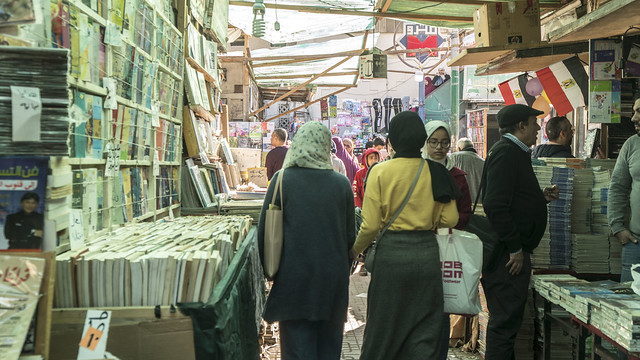
Customers in Egypt's Al-Azbakeya market
Visitors at Al-Azbakiya Market in Cairo 

Tuesday, August 27, 2019

Kodak Agfa Presents : Egypt's Spring Flowers fair 2019

Another belated post for an annual cheerful event that reminds us of the good spring breeze in those very hot days in Egypt and the world.
It is time for Kodak Agfa’s annual Spring Flowers fair post and this year it was during the Constitutional amendments referendum.
I remember that I visited the Orman spring Flowers Fair last years during the Presidential elections too.
Inside Egypt's Spring Flowers Fair 2019
Inside one of the partitions in the Spring Flowers Fair 2019
I did not stay too long but it was a good time and break.
Inside Egypt's Spring Flowers Fair 2019
Inside one of the partitions in the Spring Flowers Fair 2019

Held at Orman Botanical Garden starting from 21 March from every year, it became one of the main beautiful annual events in the country.

This was the 86th session of the Flowers Fair and Unfortunately, the government fails to promote it as a tourist attraction event despite I see foreigners, mostly from expats every year now.

Also, it is sad to know that the government is not promoting Orman botanical Garden as a tourist attraction itself for plants lovers.

We are speaking about one of the biggest and oldest public parks in Africa and the Middle East that hosts plants from outside the continent for over 100 years now like that this beautiful Mexican Shaving brush tree.

Wednesday, July 24, 2019

Kodak Agfa presents : Aisha Fahmy’s Palace a.k.a Centre of Art

I visited her niece’s palace in Alexandria and its style wowed me with its neoclassical style as well its content as a Museum.

It was time to visit Aisha Fahmy’s Palace in Cairo after its re-inauguration as a state-owned cultural center in May 2017 following at least two decades of renovation.
Aisha Fahmy palace or Al-Gazira Centre of Arts
Aisha Fahmy Palace in Zamalek 
Just like any place in Egypt, it has its stories and legends starring its once-owners The Fahmys.
The Aisha Fahmy palace was not initially built for once-Egypt’s-richest socialite and heiress Aisha Hanem Fahmy or Princess Aisha Fahmy.

The 2600-square-meter-Palace is located the edge of the River Nile directly in the Upscale Zamalek island was originally designed by famed Italian architect Antonio Lasciac for originally Aisha’s father Ali Pasha Fahmy in 1906.

Aisha Fahmy palace or Al-Gazira Centre of Arts
The main entrance to the palace
Lasciac designed many of Egypt’s top royal palaces including Abdeen Palace after it was engulfed in fire in 1891 and Tahra Palace as well as upper-class palaces including Fatma Haidar’s Palace in Alexandria.

Reportedly King Fouad I’s chamberlain, Ali Pasha Fahmy was probably the wealthiest man in the Kingdom of Egypt and Sudan.
Legend says that he was richer than the Royal Family he had got about 5000 agricultural fedans “acres” as part of his property.

Following his death, his enormous wealth was inherited by his offspring, three daughters and only one son who decided in 1923 to renovate the palace following his marriage from a French lady earlier that year.
Originally the couple traveled to Europe for a honeymoon whereas that palace with a special Nile deck was renovated.

Ali Kamel Fahmy
The self-claimed Prince Ali Kamel Fahmy
Getty Images 
That son was the 23-years-old self-claimed Prince Ali Kamel Fahmy and his wife was the infamous femme fatale Marie Margeurite Ailbert.

Despite his young age, Ali Kamel Fahmy managed to make history in the West and East when he was killed by his wife in July 1923 in a crime that inspired novelists for decades.

Before the Daily Mail and the Sun go coco behind the sexual scandals of Gulf Sheikhs, the Ali Fahmy case was the scandalous case of East met West following Egypt’s independence.

It was the original mother of all xenophobic Islamophobic homophobic crime coverage of all British tabloid.
In the UK, it was West against the East: A French lady in her 30s killed her flamboyant rich Egyptian bisexual husband for his cruel abnormal behavior in self-defense.

Back in Egypt, it was sensational affair but it was East against West: The French gold digger who killed the spoiled rich Egyptian young man because he busted her with another man in their Savoy suite in that stormy night.

Saturday, March 30, 2019

Saving Egyptian Heritage : The old Italian Phosphate Company Colony in El-Quseir

God knows that I still feel sad about how that small watches shop in Downtown Cairo inaugurated in 1907 demolished “wait for a video clip about it”, only the same thing is being repeated in another place.

In the south of Egypt at the rich-history yet the small city of El-Quseir lays a small abandoned and forgotten complex that like a small colony made by an Italian mining company and it is a time capsule.
Italian Colony in El-Qoseir
One of the administration buildings in the site now "Sebaq"
This Italian colony was founded by an Italian mining company for phosphate mining in the red sea in 1910.
Villa Italia with the Egyptian and Italian flags "Ashraf Baraka"
The employees and their families in the colony in 1946 by Ashraf Baraka