Last week, the Syrian podcast “To Be Continued…” hosted a particularly intriguing guest. For the first time, Arabi TV’s affiliated podcast featured Dr. Hussein Al-Shar’a — the father of none other than Syria’s current President, Ahmed Al-Shar’a.
The Shar'as by Sora Open AI
If you think his son, the former FBI’s most wanted man Abu Mohamed al-Golani, is a controversial figure, then you should meet his father: a veteran oil economist and researcher.
This post was revised by both Chat-GPT and Deepseek for correction, as language models, both AI models checked the theories in their own language, which is English.
This post is actually a pilot of a series of posts dedicated to the prophecies of the Middle East in the Bible, which Christian Zionists use to mess up the Middle East every couple of years.
“Damascus will cease from being a city.” — Book of Isaiah, Chapter 17
This verse from the Book of Isaiah went viral online on Wednesday, shortly after the Israeli airstrike on Damascus, the Syrian capital.
It was shared by a wide range of people—from devout American evangelicals to some inexplicably cheerful Assad supporters.
This well-known prophecy from Isaiah 17:1 (KJV) reads:
"The burden of Damascus. Behold, Damascus is taken away from being a city, and it shall be a ruinous heap."
The verse is part of a prophetic oracle, a biblical term referring to a divine message delivered by a prophet—typically announcing judgment, destruction, or doom upon a particular nation or city.
Damascus is one of several ancient cities mentioned in Isaiah’s oracles of judgment. At the time, it was the capital of the Aramean Kingdom, a political rival to both Judah and Israel (Samaria).
The prophecy foretells that Damascus will cease to exist as a city and will become a “ruinous heap.”
But here’s the problem: Damascus has been destroyed more times than San Francisco in a Hollywood disaster film—and it never actually ceased to be.
Tonight, we will know what happened to Karima when she returned to the realm of Jinn thanks to her auntie Reema.
But first, our little chitchat.
We can’t escape politics, as it seems, because we live in the Middle East. This is what I realised when I heard the name of “Golan”, which Taher Abu Fasha used as the name of the great Sultan of Jinn in our tale for this Ramadan.The
The Golan Heights of Syria has a very rich history, and it does not start with the Israeli invasion and occupation in 1967 nor even with the migration of the Israelite tribes as mentioned in the Bible, where it acquired the name of Golan.
The Golan Heights has a long and rich history of human settlement dating back to prehistoric times.
Archaeological evidence shows that the area was inhabited by hunter-gatherers as early as the Palaeolithic period.
The Venus of Berekhat Ram (280,000–250,000 BP) is a figurine found at Berekhat Ram on the northeastern Golan Heights. The pebble has been modified by early humans and is believed to represent a female human figure. It is one of the oldest artefacts ever discovered in the Middle East, with an estimated age of 280,000–250,000 BP. The figurine was found by archaeologists from the Hebrew University and is currently on display at the Israel Museum.
By the Bronze Age, the Golan was part of the broader ancient Near East, home to various Canaanite and Amorite groups. These early inhabitants were followed by Israelite tribes during the conquest of Canaan, as mentioned in biblical texts.
Over the centuries, the region saw the rise of various kingdoms and empires, including the Amorites, the Arameans, and later the Romans, who built several cities in the Golan.
The ancient Egyptians also passed through the Golan, as it lay along key trade and military routes connecting Egypt to the Levant and Mesopotamia.
Egyptian forces, traders, and officials likely traversed the area during military campaigns in the Levant, and their influence can be seen in the Egyptian-style pottery found in ancient Levantine sites.
Unlike other heights and due to its unique plateau region, the Golan was an open battlefield. It is part of the Levant that has witnessed little peace.
It is Syrian, and it will be Syrian
We will leave it for now and escape to the land of fantasy.
So, without further delay, here is the 691st episode of our Arabian Nights Egyptian radio show—or the 19th night in this year’s tale, The Tale of Fatima, Halima, and Karima
"Today, I Saw" Today, I saw the picture from afar, And I said, Hussein will die again.
Today, I saw—through a revolutionary’s eyes— Hussein, surrounded by soldiers atop his lifeless form. They beat him with batons… Every time he tries to rise.
And the people just stood there, Weeping, instead of stepping in.
The flag, a sieve, Pierced by bayonets and bullets.
The path stretched before us, Paved with blood to the very end.
Today, I saw blood on bread. And I realized, Hussein is us… No matter how many times he’s killed, He lives on.
It is the anniversary of the January 25 Revolution—our “Karbala moment.” This anniversary arrives amid yet another period of economic and political hardship.
Egypt's economic woes are no secret. The threat of instability and uprisings due to economic crises and soaring inflation is ever-present. However, 2025 is not 2011. Circumstances, both domestic and regional, are markedly different.
From the faces I saw in Tahrir square in January 2012 when there were very high hopes
For regional political reasons, I do not believe Egyptians will rise up now, especially with the Israeli army in Gaza or its attention fixed on Gaza. “Not to mention,” some sectors of Israeli society still cast their eyes on Sinai—whether as an alternative homeland for Palestinians or as part of a grand vision of Greater Israel.
However, the one scenario that could compel Egyptians to take to the streets is the loss of Sinai again—heavens forbid. This remains the true red line for the Egyptian president and military. It is a generational lesson and fear rooted in the memory of the devastating moment of June 5, 1967.
Another hard-learned lesson from history is: “Do not send our army to wars or conflicts beyond our borders—remember Yemen.”
Fortunately, the current Egyptian administration and American and Qatari mediation have managed to broker a ceasefire in Gaza. We pray that it holds and that Israel does not break it as it did in November 2023.
The anniversary of the January 25 Revolution comes as Syria's sudden regime change has brought memories of the Arab Spring rushing back. This has struck a chord in Egypt, evoking both hope and despair.
Tal al-Mallohi was only 19 years old, a young blogger, when she was detained in December 2009 by security personnel at the Syrian embassy in Cairo. Her family had moved to Cairo at the time for her safety.
Tal al-Mallohi became a celebrity and icon in Syria already
People think that al-Mallohi was detained for the first time when she was 19 years old but actually, her ordeal began when she was 16 years.
During this, the Syrian state security interrogated her Syria for something she wrote about Syria on one of her bloggers. Tal did not usually speak about Syria or criticise Bashar Al-Assad. Her blogs in Arabic were all about Palestine and Jerusalem.
After being enlisted on the security watch list she was not able to join high school, thus her family had to move to Cairo so she could study in high school.
Tal was the youngest Prisoner of conscience to be arrested in the Arab world. The young blogger was sentenced on February 15, 2011, to five years in prison.
Being the granddaughter of a former state minister for parliamentary affairs Mohamed Diaa al-Mallohi during Hafez Al-Assad’s administration did not help her.
Tal's mother Ahed al-Mallohi wrote a letter that appealed to the Syrian President Bashar al-Assad himself, asking him to intervene and order the release of her daughter but that letter did not help her daughter either.
Back in Egypt, upon learning about her arrest months later, the Egyptian blogging and journalism community demanded her release and protested against her detention, both in person and online.
Tal was to be released in 2014, but she did not, and we all know why. It was during the peak of the war between the rebels and El-Assad. More people were arrested than released during then.
Tal spent an extra ten years, a whole decade in prison.
That photo was taken by a mobile phone secretly and was smuggled to her family during her time in prison
Before 8 December 2024, I had the unfortunate feeling that she was not alive, but God’s mercy is above all.
Tal entered Al-Assad's prison when she was only 19 years old and left it at 33 years old. I can’t image what she has been through but I know that nightmare is over.
Now I have a side question as I read more and more about the Adra prison: What kind of a sick mind names a prison that is more of a concertation camp Adra which means in slang Levantine and Egyptian Arabic virgin aka the Virgin Mary.”
I have been glued in front of Al-Jazeera and social media in the past 48 hours to see the unbelievable accelerating end of Al-Assad Baath regime
Al-Assad dynasty rule ended in Damascus, Syria after 54 years. I can’t believe that I am blogging about it at last.
Damascus without Bashar Al-Assad The headline of Syria TV
I can’t believe it, I still can’t.
Al-Assad has escaped along with his family to Dubai or God knows where.
I am just realizing that Al-Assad has become the last Arab Spring despot to lose his chair, I read that amazing news that I could not believe that it was happening.
“I was working on this post before Israel launched Operation 'New Order,' which killed over 500 people in 48 hours, including Hezbollah leader Hassan Nasrallah. However, let’s say that this post serves as an important introduction to what is happening or will happen in the Middle East.”
A year ago, Benjamin Netanyahu stood at the 78th session of the United Nations General Assembly (UNGA) with a small map of the "New Middle East."
It was both an intriguing and alarming map, as it depicted no Palestinian state whatsoever.
The map clearly illustrated what he and his government had sought from day one: the annexation of Gaza and the West Bank, while maintaining relations with Arab countries—especially the recent signatories of the Abraham Accords (Sudan, UAE, and Bahrain)—and, most significantly, the holy grail for any Israeli government: Saudi Arabia.
Bibi at the 78th session of the UNGA in 2023
Ironically, Netanyahu's map of the "New Middle East" excluded Morocco, perhaps because he considered it too distant as a North African country.
At the time, Egypt and Jordan regularly issued statements in response to Israeli provocations in the West Bank, warning that they could lead to escalations.
Meanwhile, the U.S., or rather the Biden administration, seemed solely focused on racing against time to finalize a Saudi-Israeli normalization deal before Donald Trump could return and derail it.
Exactly one month later, everything changed, and it seems that everyone forgot about Netanyahu’s map—except Netanyahu and his government.
Since October 8, 2023, Netanyahu has shown little concern for rescuing Israeli hostages. Instead of focusing on their safety, he appears more concerned with saving himself and his government from accountability amid a political crisis, while pursuing his agenda of making that map a reality.
I find myself feeling angry and frustrated because I’ve come to realize that this world once again does not really care for us truly as Arabs and Mideasterners as well as Muslims.
A baby survived an Israeli shelling in Gaza by Belal Khaled
What has been happening for over 85 days did not only change me, it changed all of us. Generations of Arabs and Muslims especially young ones who still had hope in this world, were let down.
Two weeks ago, US President Joe Biden's National Security Advisor Jake Sullivan said confidently in a public think tank meeting in Washington that the Middle East is quieter today than it has been in two decades.
Jake Sullivan
I do not know if he was serious, in denial, or demonstrating the US's true intent to leave the Middle East to deal with "its own shit." Whatever the case may be, I know that the Middle East is not quieter today than it has been in two decades. In fact, things are getting from bad to worse.
Let’s see the Middle East’s map and I will exclude the Palestinian territories.
According to the EU’s official website, this conference is made to bring together “civil society from Syria and beyond, decision-makers, and operational partners to engage in dialogue on Syria and the region as well as on its humanitarian and resilience challenges.”
The EU says that the objective of the event is to “ensure continued support to the Syrian people, both in Syria and in the wider region, by mobilizing the international community in support of a comprehensive and credible political solution to the Syria conflict, in line with UN Security Council resolution 2254.”
In other words, it is another bottomless talkathon by the EU to speak about Syria that has not yielded any change realistic that can stop the Syrian ongoing tragedy.
During one of the event's discussion panels, focusing on "Justice and accountability for the Syrian people - current efforts by civil society, international organizations, and national jurisdictions, and the way forward," someone had the guts to speak their mind.
That someone is Wafa Mustafa, a Syrian activist, journalist, and Non-Resident Fellow at the Tahrir Institute for Middle East Policy (TIMEP) and Refugees International.
Wafa Mustafa holding the photo of her detained father along with the photos of other Syrian detainees "Wafa Mustafa"
As the daughter of a Syrian detainee who has been forcibly disappeared since 2013, Mustafa had some strong words for the EU, especially in light of the Syrian government, led by Bashar El-Assad, returning to the League of Arab States and the warm reception he received at the Jeddah summit.
Earlier Friday, the Arab leaders as well as their representatives held the 32nd meeting of the Arab summit in Jeddah.
To cut things short, nothing is expected to change due to this summit just like the other summits, but two things happened on Friday.
Bashar El-Assad had a warm welcome from most of his Arab counterparts.
Despite the Western warnings, the Arab countries led by Saudi Arabia and the Emirates support the return of El-Assad and his regime to the Arab League with no regard for whatever happened to the Syrian people in the past 12 years.
The 32nd Arab Summit in Jeddah's leaders
El-Assad gave one of those speeches cursing the immoral West, Muslim Brotherhood Turkey and Israel that is being ignored in the Arab world according to him “Man, I remembered how I used to admire his long speeches in the summit in the first years of his rule, how naïve I was.”
Also, the President of Ukraine Volodymyr Zelenskyy came to Jeddah and addressed the summit. Zelenskyy spoke about the Ukrainian Muslims.
I do not know if he realized that in front of him El-Assad who officially committed war crimes against his own people, mostly Muslims has been received like a hero.
The Saudi media is trying to position the Arab summit in Jeddah as the “Reconciliation” summit because of the reinstatement of Syria to the League of Arab Summit and the participation of Bashar El-Assad in the summit.
Social media networks began to suspend the English accounts of Russia Today “RT” and Sputnik, their Arabic services are still operating normally.
A file photo of RT TV truck parked at the Red Square in Moscow "AFP"
YouTube decided that RT and its subchannels are going to get revenues.
RT used to get millions of US dollars from the views considering the fact it was the “Most watched news network on YouTube in 2020” according to its own claim.
In the past 48 hours, I found my timeline whether on Egyptian and Arab Facebook or Twitter timelines discussing whether the sanctions on RT and Sputnik was unfair, an attack on freedom of expression and another sign of the West’s hypocrisy and double standards.
I have read in those hours that the West only picks the freedom of expression cards for its own interests but when it comes to its national security, it blocks RT and Sputnik. “You can guess who is saying and repeating this.”
Personally, I am facing a dilemma as someone who believes in freedom of expression as well as the fight against misinformation because I know there is a thin line between them, and some will use the fight against misinformation to crackdown on freedom of expression and freedom of information.
This is not “What about-ism” but about clear double standards when it comes to the sports world.
First of all, I must be clear.I am totally against the Russian invasion of Ukraine and I am totally against Russian propaganda or any other propaganda.
Yet, on the sideline of the awful invasion of Ukraine, there are certain issues that provoke me whether in the international media or the international reactions.
For years, we were told in the Arab world that politics should get involved with sports.
That’s what we are being told whenever we bring up similar demands to suspend clubs of countries involved in military attacks and invasions in the Arab world.
For instance Israel and Palestine or the biggest elephant in the room.
Thanks to Egyptian Football fans, I knew that FIFA ignored the demands of Palestinian activists to suspend the activities of 6 Israeli clubs built on occupied Palestinian West Bank territories in a clear violation of international laws and UN Security Council resolutions.
The Syrian activists urged the international sports federation to ban the official Syrian sports federation and official national teams that follow the Al-Assad regime and the answer they get every time is a lecture about how we should not mix politics with sports.
It is a new month under the Coronavirus pandemic, unfortunately.
It is the third March Egypt and several Arab countries live through the Covid-19 pandemic.
Needless to say thanks to the Russian invasion to Ukraine, the whole world forgot within a week something called “Coronavirus”.
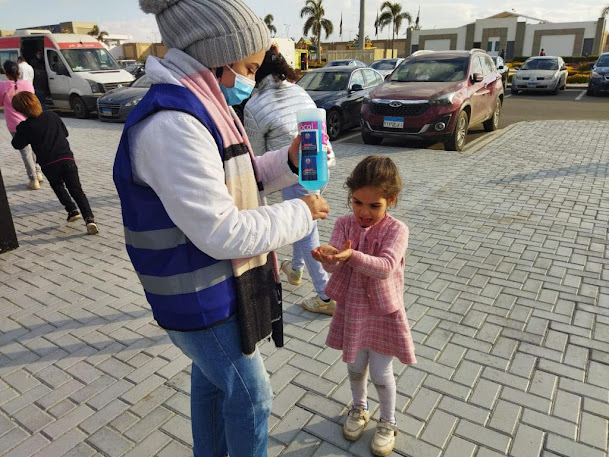
Egyptian nurse holding a Covid-19 vaccine dose "UNICEF"
Anyhow, there is good news this month as starting from Mid February the daily cases of coronavirus in Egypt and other Arab countries became to decline again and it seems that we are at the end of that Omicron wave that hit hard. “I know first hand”.
Hopefully inshallah we witness the dismissal of this virus soon and not its comeback in another variant due to the Russian invasion and the new Ukrainian refugees' crisis.
Please stay safe and try to get the booster if you can.
Get vaccinated if you are not vaccinated, please.
Below is our live coverage of everything coronavirus in Egypt and the Arab world in March.
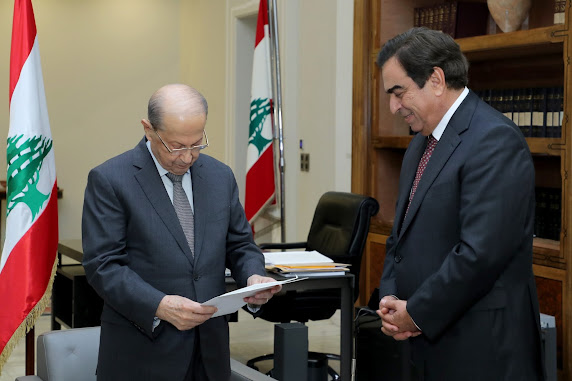
On Friday Veteran Lebanese media figure George Kordahi presented his resignation as Minister of information to the Lebanese President Michel Aoun ending a month-long diplomatic crisis with Gulf countries over his statements concerning the war in Yemen.
On 25 October, Al Jazeera Network’s “People’s Parliament” web show released its episode with guest George Kordahi. The episode was filmed on 5 August before Kordahi was appointed as the information minister in Lebanon representing Marada Movement and approved by Iran-backed-Hezbollah.
George Kordahi presented his resignation to Lebanese President Michel Aoun in Beirut on Friday "Lebanese Presidency)
During the show, Kordahi said that the war in Yemen was absurd that must stop and that Iran-backed-Houthis were defending themselves against foreign attacks.
It is another new month in the time of the coronavirus pandemic in Egypt and the World.
It is Sweet November, the second November in the time of coronavirus.
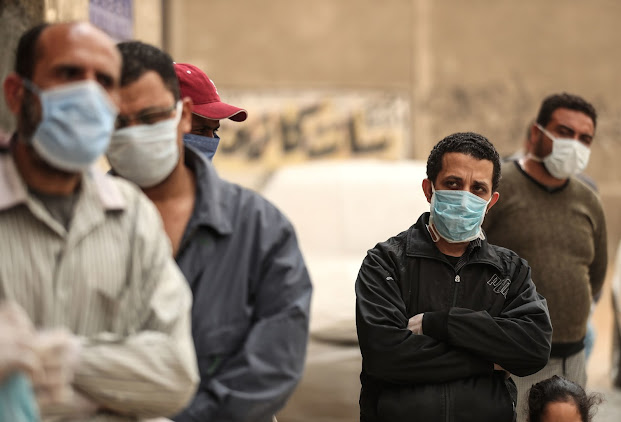
The man with the mask, the camel and the pyramid in Giza in 2020 "AFP'
October witnessed an escalation in the coronavirus cases as the country began its peak moment in the coronavirus’ fourth wave.
It is expected to see a decline in the cases in November, at least in its second half.
In Mid November, on 15 November exactly the Egyptian government will make vaccination mandatory on public servants nationwide. Either to be vaccinated or to present a negative PCR every two weeks.
More vaccines are set to arrive in the upcoming weeks
The government set a goal to vaccinate 40 million Egyptians by the end of 2021.
Anyhow Please stay safe, keep your social distance and get vaccinated as soon as possible.
Here is our monthly live coverage of everything coronavirus below.
It is another new month in the time of the coronavirus pandemic in Egypt and the World.
It is October and many believe that all the year should be October, well I won’t say no except I miss the Octobers without Coronavirus and its anxiety.
On the first day of school in Cairo on 9 October 2021 "Sayed Hassan"
Currently, Egypt is having its coronavirus fourth wave moment and according to officials, we are going to see it peak in the upcoming three weeks.
Nevertheless, the Egyptian government is trying to intensify its efforts to accelerate the vaccination process, especially it has received millions of doses donated by other foreign countries like the United States. It is expected though as the academic year will start
The government set a goal to vaccinate 40 million Egyptians by the end of 2021. It also set a goal to vaccinate also all university students and staff before the academic year would kick off on 9 October.
We will see if it reaches that goal or not.
Anyhow Please stay safe, keep your social distance and get vaccinated as soon as possible.
Here is our monthly live coverage of everything coronavirus below.
It is May and in its first half of it, We got Labor Day, Orthodox Easter, 10 days of Ramadan and Eid during a scary surge of coronavirus cases across the country right now.
I do not know if we are in the middle of the third wave’s peak or the peak will be reached after those two weeks of national holidays and social gatherings.
A Health Ministry worker giving medicine to coronavirus patient at home in Sohag governorate "Egyptian health ministry"
In 2020, Egypt’s witnessed the peak of the coronavirus’ first wave in June right after Ramadan.
The government does not want a full lockdown or semi lockdown but it may resort to that if things go out of control.
The majority of the people are still careless. In those first 20 days of Ramadan restaurants and Sohour tents are back to business.
The only difference is that they do not offer shisha. Ramadan concerts are back. The public informal markets are over packed.
It is more than alarming because we are still very slow when it comes to vaccination. We still do not have enough vaccines and many people are scared of vaccination too.
Facebook has become like a scary obituary social network.
Stay safe, Stay at home as much as you can, keep your social distance, wear your mask and get vaccinated, please.
Here is our monthly live coverage of everything coronavirus in Egypt and the Arab world.