Showing posts with label Egyptian Royalty. Show all posts

Saturday, November 22, 2025

The damned dam: No, Trump Did Not Stop a War Between Egypt and Ethiopia

Egypt issued a new statement last week warning that Ethiopia’s latest unilateral and unregulated operation of the Grand Ethiopian Renaissance Dam (GERD) has caused sharp fluctuations in water flows along the Blue Nile.

This unexpected surge has forced the Egyptian government to open the Toshka spillway to safely absorb the excess water.

This is the second—or perhaps even the third—such warning Egypt has issued within a span of three months. Honestly, I’ve lost count.

Now, I am seizing this moment to clarify a recurring claim: Donald Trump did not stop a war between Egypt and Ethiopia.

There was no war between Egypt and Ethiopia to begin with.

I will acknowledge that real progress was indeed achieved during Trump’s first term. In February 2020, the parties were genuinely on the verge of signing an agreement before Ethiopia backed away at the last moment.
Still, there was no war, nor any military confrontation, for Trump to “stop” in his previous or current term.

The only time Egypt and Ethiopia were actually at war was in the 19th century, when Khedive Ismail attempted to follow in the footsteps of his grandfather, Mohamed Ali Pasha, in Sudan.

Wednesday, March 12, 2025

Ramadan Arabian Nights 2025 : The Tale of Fatima, Halima and Karima “ The fate of Fatima , Halima and Karima” EP.13

Ramadan Kareem

Tonight, we will know not only why Fatima did not bring the oil or the remaining money to her evil stepmom but also the future fate of the three girls, but first, a little chitchat.

For decades, many Egyptians and Arabs thought that Taher Abu Fasha chose the names of Fatima, Halima and Karima because of the rhythm. Thus it was a generational surprise when we found out that there could be a real inspiration behind the names of Fatima, Halima and Karima, and she was indeed a royalty, somehow a princess.

Yes, a princess. Princess Karima Halima Fatima of Egyptian Mohamed Ali Royal Family. holds probably the longest woman’s first name in the history of modern Egypt.

Noblewoman Karima Halima Fatima Mohamed Abdel Halim was born on March 15, 1898. She was the daughter of Prince Mohamed Abbas Halim, the son of Mohamed Abdel Halim Pasha, and the grandson of Mohamed Ali Pasha. On her mother's side, she was the granddaughter of Khedive Tawfiq, as her mother was Princess Fakhr Al-Nisa Khadija, the daughter of Khedive Tawfiq.

Karima had five sisters: Wojdan, Amina, Tawfiqa, Naematallah, and Zeinab.

Her first marriage was to Osman Fuad Oğlu (1873–1922), who served as the commander of Ottoman forces in Libya during World War I. The couple did not have any children.

Real noblewoman Karima Halima Fatima Helmy
wearing her Cartier tiara 

She later married Prince Youssef Kamal on January 11, 1937, but their marriage was short-lived. They divorced on October 29 of the same year.

Karima passed away on March 28, 1971.

According to Egypt’s Royal Story Facebook page “Best source of Modern Egyptian Royal History FB page” in 1935, her financial allowance was recorded at LE 600. She was also known for owning a remarkable Cartier tiara, crafted around 1930. The versatile piece could be worn as a necklace, bracelet, or a set of brooches.

Designed in an elaborate lotus motif, the tiara was made of platinum and adorned with small diamonds and round brilliant-cut diamonds, totaling approximately 52.50 carats, with a length of about 420 mm.

In 1980, the tiara was sold by an unknown owner at Christie’s for $75,000. In November 2010, an Italian noble family acquired it from Sotheby’s for $185,650. In 2015, it was resold at Sotheby’s for $287,277. Its current owner remains unknown.

Despite the lack of concrete proof that Karima Halima Fatima of the Mohamed Ali Royal Family inspired the tale of the three sisters, many, including myself, believe that folklorist Taher Abu Fasha may have drawn inspiration for their names from this noblewoman.

Now we will leave the real Karima Halima Fatima, May Allah bless her soul and go to the fictional Fatima, Halima and Karima’s world.

So without further delay, here is the 685th episode of our Arabian Nights Egyptian radio show—or the 13th night in this year’s tale, The Tale of Fatima, Halima, and Karima.

Saturday, February 11, 2023

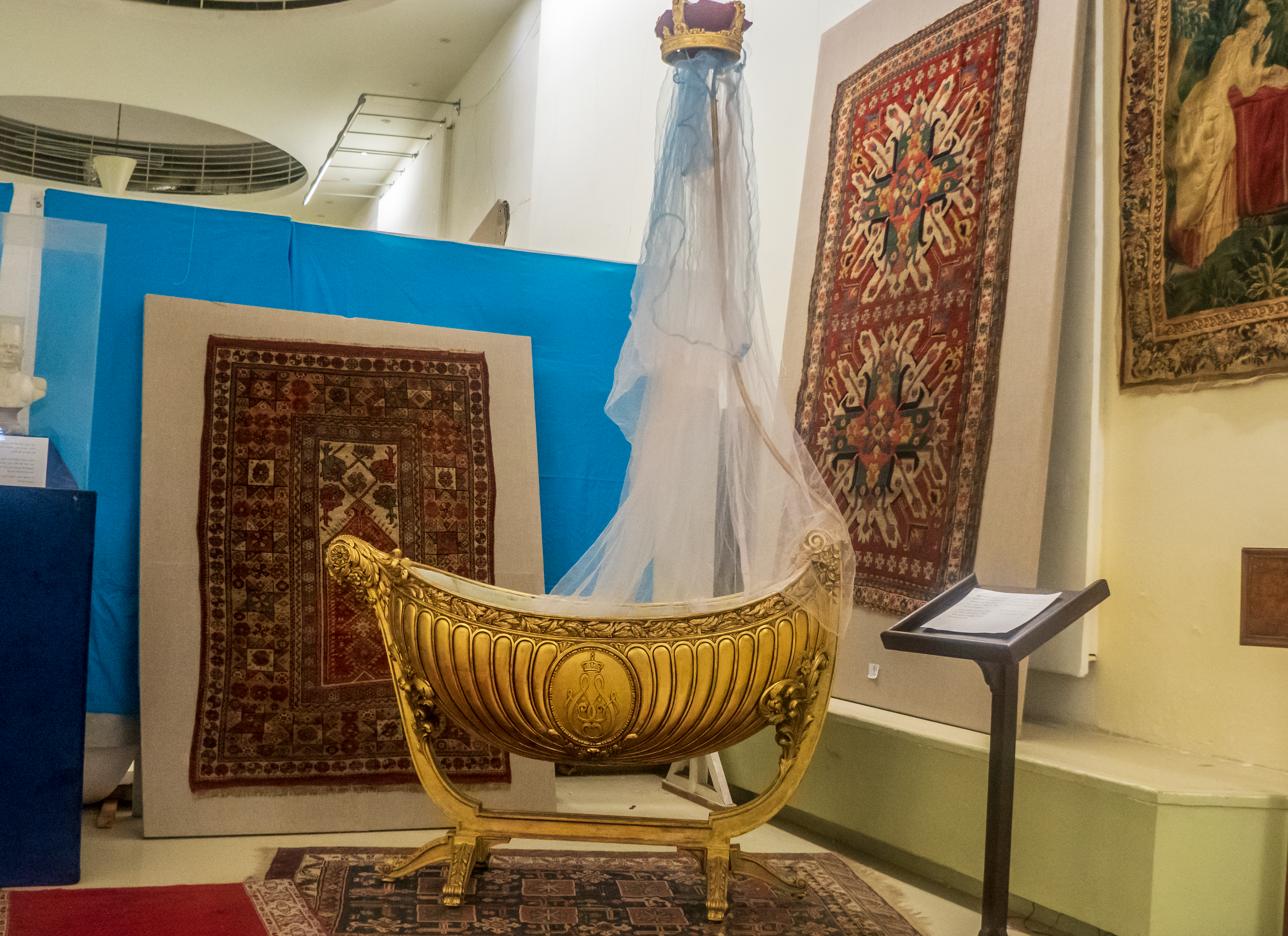
Seen in Cairo: King Farouk’s Golden Cradle

Once Seen in Cairo: On the occasion of King Faoruk's birthday on 11 February 1920 “11 February is an interesting day for Egypt’s rulers as it seems", here is the special gold-painted handmade baby cradle of Egypt and Sudan's late ruling king from Mohamed Ali Dynasty.

King Farouk I's golden wooden cradle 

He was then Crown Prince of Upper Egypt

The Photo was taken at a special temporary exhibit at Prince Mohamed Ali Manial Palace estate in January dedicated to the retrieved lost Mohamed Ali Family’s artefacts.

Sunday, November 21, 2021

Egyptian X-Files : The curious case of Princess Fawzia’s diamond Parure

This post should have been posted last week but between work and what is happening at Cairo’s historical cemeteries overshadowed the plans I had.

This post is about another piece or rather missing pieces of the famous Princess Fawzia’s Jewelry collection. Last week, we saw the former Queen of Iran’s jewelry collection at Alexandria’s Royal Jewelry Museum as well as some famous jewelry pieces she wore whether in Iran or Egypt.

Nevertheless, we did not speak about her most famous jewelry pieces ever but now the time has come to speak about the famous legendary diamond parure of Princess Fawzia or the Holy Grail of the Egyptian Royal Jewelry.

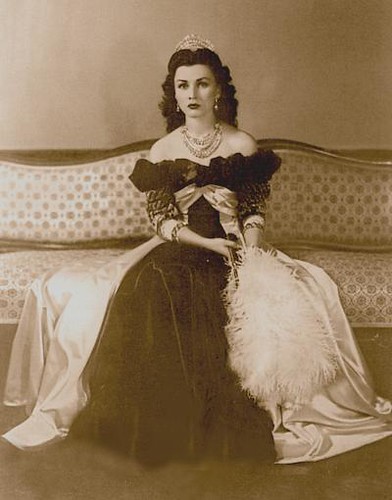
Empress Fawzia by Cecil Beaton
The famous photoshoot of Queen Fawzia in Tehran
in 1942 by Cecil Beaton

Just like the striking beauty of the Egyptian Princess, that diamond parure was also immortalized when famous British photographer Cecil Beaton took those famous and official photos of Fawzia Fouad in Tehran in 1942.

Empress Fawzia
Fawzia wearing the full diamond parure
in Tehran "Cecil Beaton"

But its story went back before 1942

In the year 1938, the Egyptian Royal Family commissioned French Jewelry House Van Cleef & Arpels to design a special diamonds parure for the new bride Princess Fawzia as her engagement to the Crown Prince of Iran was announced.

Sunday, November 14, 2021

Egypt’s Queen Farida at 100: Please Save her tomb, Safeguard Historic Cairo Cemeteries "Updated"

This month does not mark only the centenary of Princess Fawzia Fouad, it is also the centenary of Egypt’s Queen Farida.

Queen Farida is by far the most popular Queen/First lady in Egypt in modern times. We are speaking about an amazing model of an Egyptian woman who did not bend due to hard circumstances whether political or economic situations.

From Egypt’s privileged upper class to the Royal throne to become a young popular Queen then to get a divorce then to face political and economic upheavals then to become a prominent artist in exile before returning to Egypt, Queen Farida was a unique example of Egyptian strong independent woman when you think about it.

I want to write something about her jewelry collection at the Egyptian Royal Jewelry Museum but due to time limits, I could not because it is bigger than Fawzia’s collection.

Instead, I am writing this sad post

The Egyptian government decides to remove the cemetery of Queen Farida giving her family’s descendants very short notice to transfer the remains of their ancestors among other families to very small cemeteries at the 15th May city’s outskirts because of new highways and bridges plan in Cairo.

Queen Farida's tomb at her family cemetery in Cairo 
"Seif Allah Zulficar

So instead of a special exhibit featuring Queen Farida, her jewelry and her art in any of the so many museums we have in Egypt, this is how the Egyptian government celebrates her centenary.

Wednesday, November 10, 2021

Kodak Agfa Presents : Some of Princess Fawzia’s Jewelry at Alexandria’s Royal Jewelry Museum in photos

On 5 November From 100 years ago, a baby girl was born in Alexandria, Egypt.

She was born as a true real living princess, her father was a king of one of the greatest and oldest kingdoms in the East. Like in a fairy tale, She was a stunning beauty.

After her father’s death, her eldest brother became the king.

Soon she also married a crown prince of another great Eastern kingdom. In a couple of years, that crown prince became his country’s King or rather Shah and she became the queen.

You would think that she would live happily ever after just like in Disney’s films for princesses yet the reality is different from fiction and late Princess Fawzia Fouad of Egypt knew that first hand.

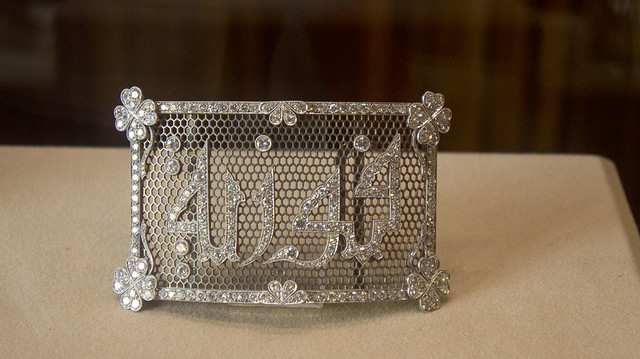
Princess Fawzia's Diamond hairpin at Royal Jewelry Museum
A hairpin made of diamonds with the name of Princess Fawzia in Arabic 

Now on this occasion, I would like to share this collection of jewelry that was owned by the former Queen of Iran at Alexandria’s Royal Jewelry Museum.

Late Princess Fawzia in late 1940s
Late Princess Fawzia in the late 1940s 

Yup, there is a jewelry collection of Egypt’s legendary sad beauty Princess Fawzia Fouad at this often forgotten less-known yet wealthy museum.

Tuesday, August 24, 2021

Kodak Agfa Presents : The Royal Taxidermy and Hunting Museum

This post was planned for the occasion of Egypt’s National Day aka 23 July Coup/Revolution/Movement “Whatever you prefer” as Kodak Agfa would like to share with you those couple of photos taken in summer 2019 but time was not that friendly.

It ended up posted a month later!!

If you are into bizarre-stuff-niche museums with a little dark twist, then you will like this post. 

If you are into hunting and animal taxidermy, then this is your place.

Gazelles shoulder mount taxidermy at the Royal taxidermy

This post is about the Mohamed Ali Taxidermy and Hunting Museum or as officially known “Royal Hunting Museum”.

This place is in the Prince Mohamed Ali Tawfik Estate at Cairo’s Al-Manial island which I visited with a group of friends in August 2019.

We already visited its beautiful small mosque and saw how much the eccentric prince who could have been a king was influenced by Islamic architecture especially in Andalusia.

Our next stop in this big estate that looks like a small oasis inside the buzzing Cairo is the Royal Hunting Museum or Mohamed Ali taxidermy museum. “I hope its trees survive the trees massacre still going on across the country”

Water Buffaloes shoulder mount taxidermy and a goose taxidermy at Mohamed Ali taxidermy museum
Water Buffaloe's shoulder mount taxidermy and goose taxidermy
 at the Royal taxidermy museum

First, I apologize for the bad photography as the lighting in the Museum is not camera friendly. There are out of focus photos too. 

I thought at first this is the personal collection of Prince Mohamed Ali Tawfik and that building where he used to taxidermize those poor animals he hunted and collected.

This made me think that he would be more eccentric than he was already.

But I was mistaken.

That small building located near the mosque did not exist before the 1960s. It was not part of the original buildings in the estate, nor it was commissioned by Prince Mohamed Ali Tawfik.

Tuesday, November 24, 2020

Kodak Agfa Presents : Egypt’s Temple of Luxor 2012 in photos “Part 1”

This is a very belated post, truly belated post.

Remember when I visited Luxor and Aswan in 2012 and how I shared photos from the trip especially in Aswan!?

I shared photos from Aswan’s High Dam, Temple of Philae, Kitchener’s Island, Temple of Kom Ombo and Temple of Edfu. I shared also photos from Luxor’s world-famous Karnak Temples complex.

I remembered that I have not shared or uploaded the photos of other landmarks in Luxor: Luxor Temple and Hatshepsut Temple. I visited the Valley of the Kings too, but I followed the instructions then that said explicitly “No photography”. Now, people take photos and film videos easily thanks to mobile phones.

Yes, I forgot to post them all those years and I do not have any good excuse, to be honest

Anyhow, I guess now it is the perfect time to share those photos especially it seems that we are on the verge of another possible wave of coronavirus lockdown in the world and we may have to stay at home once again till the vaccines are distributed fairly and freely hopefully.

Kodak Agfa will go back in time to February 2012 and visit the great and marvellous Luxor Temple in two-parts posts.

There is a little reminder here: The photos are not that great as Kodak Agfa was still finding her way with photography using baby Sony Nex 5.

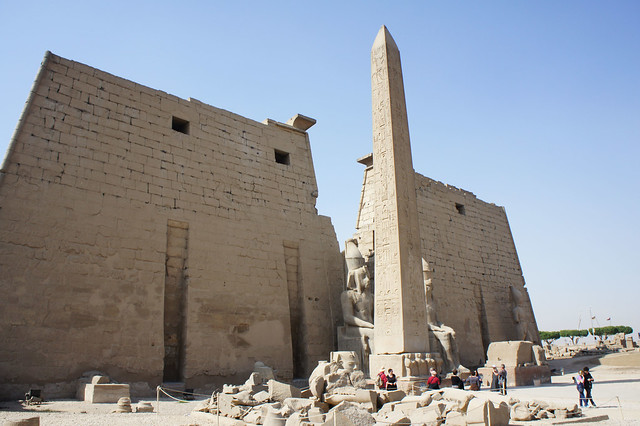
Egypt's Luxor Temple
The Temple of Luxor's great pylon with its famous obelisk 

I do not know where I shall start the story of Luxor Temple. It is uneasy to recount the history of one of Egypt’s oldest temples that still standing after 3,000 years of its construction and inauguration. The history of that temple complex is like a layer over layer.

Most of the Temple Complex of Luxor was constructed during the New Kingdom but it may go further than this.

Some say that its area which is close to the bank of the Nile was considered scared and was dedicated to the cult of Amun since the 11th dynasty in the Middle Kingdom but the actual construction itself of the current temple complex was during the New Kingdom especially during the 18th and the 19th dynasties aka the Golden age of the New Kingdom.

The construction in the temple complex did not stop after those two dynasties, on the contrary, it continued playing a role in the city of Luxor and Egypt itself till the Greco-Roman era and even beyond as you will see.

Egypt's Luxor Temples Complex
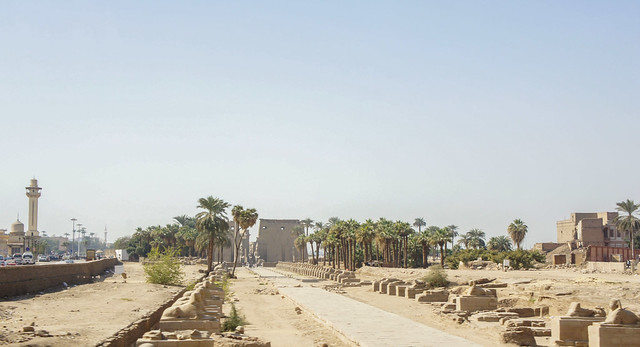
The avenue of Sphinx outside Luxor temple

Here is my best attempt starting with the first photo I took for this majestic place from our bus.

There we were in front of the iconic entrance of the temple and in front of it the famous Sphinxes avenue.

The sphinx avenue used to connect between the Luxor temple complex and Karnak temple complex.

Thursday, August 20, 2020

Kodak Agfa Presents : Prince Mohamed Ali Palace's Mosque and Clock Tower

First of all, Happy new Hijri year 1442 to all Muslims around the globe.

I hope that year 1442 would better inshallah for the whole world.

On this occasion, I would like to share with you couple of photos I took while visiting the Prince Mohamed Ali Palace or rather an estate or El-Manial Palace as commonly known last August with a group of friends in Cairo. 

Built from 1899 to 1929, El-Manial Palace was designed by Prince Mohamed Ali Tawfik “1875-1955”, King Farouk’s Uncle and it is considered one of the best-preserved remaining palaces form the Mohamed Ali Royal Family era.

The Prince Mohamed Ali Palace or rather estate is so big and a good many interesting attractions. Interestingly, this huge piece of land was originally owned by Prince Mohamed Ali Tawfik's great Uncle Prince Fadel.

Prince Fadel had a mosque named after him in El-Sayida Zeinab.

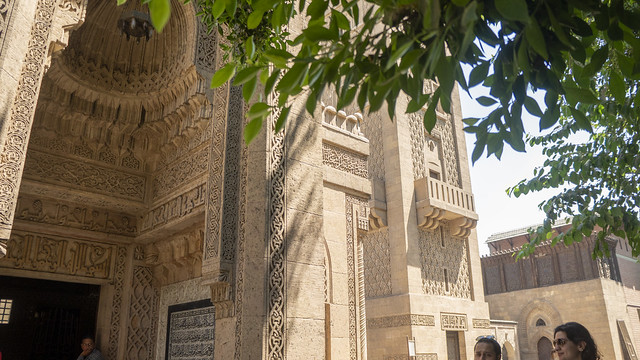
Outside Egypt's Prince Mohamed Ali Mosque in his Palace Complex in Cairo
Prince Mohamed Ali Tawfik's Mosque in his Cairo estate

This time the photos are the for the Prince  Palace’s Mosque and its clock tower.

The younger brother of Khedive Abbas Helmi II built a mosque in his estate and it is a very beautiful small mosque. Prince Mohamed Ali Tawfik and his staff in his estate used to pray in that mosque

Thursday, November 21, 2019

Kodak Agfa presents : Features of an era “The Mohamed Ali Royal dynasty of Egypt” in photos Part-2

This is the second part of my photo-series about my visit to The features of an era “Mohamed Ali Royal Dynasty” edition that was held in March 2019 at Aisha Fahmy Palace aka “Al-Gazeira Centre of Arts". You can check the first part of the series here.

I am still trying to hijack the Mohamed Ali whistleblower trend as he is back this time in the international media with interviews in BBC, NY Times and Guardian. There is a new round of interviews coming on the way by him as it seems.
He held a very raising eye-brow press conference in London calling for some revolution/peaceful-transition of power/referendum/reconciliation which many are puzzled with back home.
In the end, it is kind of ironic that Ali is the only vocal opposition figure in Egypt.

Back to the original Mohamed Ali and his dynasty in that exhibit.
There are lots of beautiful stuff in that exhibit that could not be presented in a single post.

The Mohamed Ali Family tree till early 20th century
Egypt's Mohamed Ali Family tree in the 19th century 
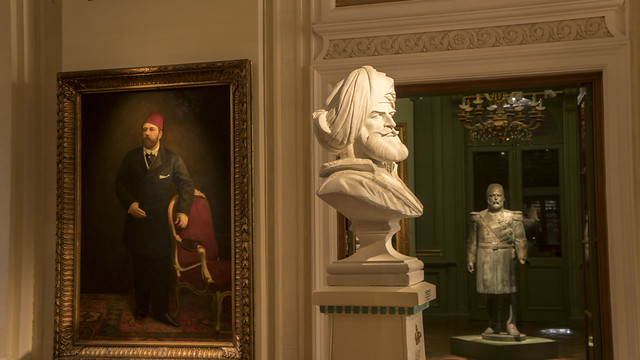
Aside from the very well crafted paintings and busts as well as the statues featuring the rulers of Mohamed Ali Royal family rulers, there were awkward artworks in the exhibit too.
Mohamed Ali Pasha's Marble bust
Mohamed Ali Pasha looked like a sweet granddad here 
Like that marble bust made Mohamed Ali Pasha look like Egyptian actor Yahia El-Fakhrany "The veteran Egyptian actor wanted to play him on-screen" for real or like a kind old Druze religious man in the mount of Lebanon or Syria not like a man who built a modern state in the 19th century restlessly and violently. "Democracy and human rights were not on his agenda but it was the early 19th century and those two words were strange to the East" 


Now that's a painting to Mohamed Ali we used to know from history books along with his son Khedive Ismail.
Khedive Ismail and his father Mohamed Ali Pasha in Features of an era
The father and Son, Mohamed Ali Pasha in painting and Khedive Ismail as a bust 
One of the things that I like about this exhibit is that it featured also the members of the Mohamed Ali royal family that are not that famous to the public.

Like for instance, Mohamed Ali’s eldest son Tusun pasha when he was a young boy.

Saturday, September 14, 2019

Kodak Agfa presents : Features of an era “The Mohamed Ali Royal dynasty of Egypt ” Part-1

Disclaimer: This post is dedicated to Mohamed Ali Royal Family of Egypt and not the controversial whistleblower Mohamed Ali and his family and yes I am "riding the trend" to spread something useful 🙈🤐😎

You have seen the photos of Aisha Fahmy Palace aka Centre of Arts in Zamalek, now it is turn to see the photos of that exhibit yours truly went to cover there in March 2019.

The exhibit was called “Features of an era: The Mohamed Ali Family” and it featured for the first in public paintings mostly from portraits, statues of the former Egyptian ruling family as well as some of its positions.

Three generations of Mohamed Ali Family
Three generations of Mohamed Ali Royal Family including its founder Mohamed Ali Pasha in
one photo
Most of the paintings and statues were removed from the royal palaces and public squares following the coup of July 1952 and the declaration of the republic in June 1953.
Three generations of Mohamed Ali Family's rulers
Another three generations of Mohamed Ali Family appearing in one shot 
For decades they were kept hidden in warehouses.

Wednesday, July 24, 2019

Kodak Agfa presents : Aisha Fahmy’s Palace a.k.a Centre of Art

I visited her niece’s palace in Alexandria and its style wowed me with its neoclassical style as well its content as a Museum.

It was time to visit Aisha Fahmy’s Palace in Cairo after its re-inauguration as a state-owned cultural center in May 2017 following at least two decades of renovation.
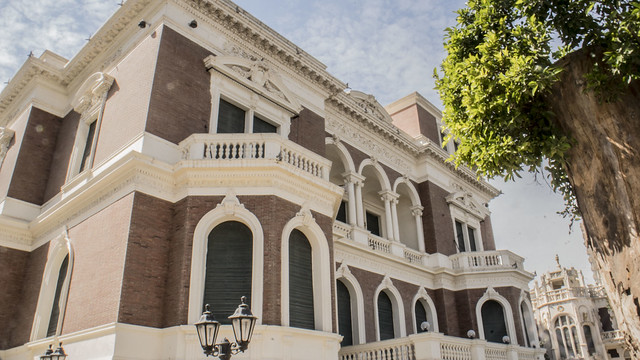
Aisha Fahmy palace or Al-Gazira Centre of Arts
Aisha Fahmy Palace in Zamalek 
Just like any place in Egypt, it has its stories and legends starring its once-owners The Fahmys.
The Aisha Fahmy palace was not initially built for once-Egypt’s-richest socialite and heiress Aisha Hanem Fahmy or Princess Aisha Fahmy.

The 2600-square-meter-Palace is located the edge of the River Nile directly in the Upscale Zamalek island was originally designed by famed Italian architect Antonio Lasciac for originally Aisha’s father Ali Pasha Fahmy in 1906.

Aisha Fahmy palace or Al-Gazira Centre of Arts
The main entrance to the palace
Lasciac designed many of Egypt’s top royal palaces including Abdeen Palace after it was engulfed in fire in 1891 and Tahra Palace as well as upper-class palaces including Fatma Haidar’s Palace in Alexandria.

Reportedly King Fouad I’s chamberlain, Ali Pasha Fahmy was probably the wealthiest man in the Kingdom of Egypt and Sudan.
Legend says that he was richer than the Royal Family he had got about 5000 agricultural fedans “acres” as part of his property.

Following his death, his enormous wealth was inherited by his offspring, three daughters and only one son who decided in 1923 to renovate the palace following his marriage from a French lady earlier that year.
Originally the couple traveled to Europe for a honeymoon whereas that palace with a special Nile deck was renovated.

Ali Kamel Fahmy
The self-claimed Prince Ali Kamel Fahmy
Getty Images 
That son was the 23-years-old self-claimed Prince Ali Kamel Fahmy and his wife was the infamous femme fatale Marie Margeurite Ailbert.

Despite his young age, Ali Kamel Fahmy managed to make history in the West and East when he was killed by his wife in July 1923 in a crime that inspired novelists for decades.

Before the Daily Mail and the Sun go coco behind the sexual scandals of Gulf Sheikhs, the Ali Fahmy case was the scandalous case of East met West following Egypt’s independence.

It was the original mother of all xenophobic Islamophobic homophobic crime coverage of all British tabloid.
In the UK, it was West against the East: A French lady in her 30s killed her flamboyant rich Egyptian bisexual husband for his cruel abnormal behavior in self-defense.

Back in Egypt, it was sensational affair but it was East against West: The French gold digger who killed the spoiled rich Egyptian young man because he busted her with another man in their Savoy suite in that stormy night.

Thursday, June 27, 2019

The fire of Cairo’s Attaba vegetables market : The curse of neglect

I do not like to write these blogposts.

Photo of the fire on Thursday
from Facebook 
Earlier Thursday, a huge fire engulfed Cairo’s old Attaba vegetable market destroying a huge part of it due to the lack of industrial security.

Thankfully no one is harmed in that fire.

According to news reports, the fire started because of some gas cylinder. The fire destroyed many of the shops inside the wooden market in early Thursday morning.

Old wood, extremely hot weather conditions and lack of any means to put of fire can destroy buildings stronger than this.

The initial financial losses according to the Cairo prosecution is estimated by LE 2 million according to Al-Watan Newspaper.

Now, most of the news websites took the news and published scary photos for the huge fire that destroyed several shops inside the market ignored its history.

We found out that this market was originally planned in the time of Khedive Ismail in the 19th century in his vision to turn Cairo into another Paris. He wanted to have modernized markets then. It was designed and built by Austrian architect Julius Franz Pasha.

It was inaugurated in the time of his son Khedive Tawfik. It was inaugurated on  15 December 1892.

Cairo's Old Attaba vegetables Market
The unique gate and roof of the market by Michel Hanna in 2016 
It is registered as a "Building with distinguished architectural style" in the National Organization For Urban Harmony under the number "03220000032" which means it could not be demolished if I am not mistaken.
Here is a fantastic report about what was known as Le Marche De Caire. 

Wednesday, June 19, 2019

When Israeli media covered Morsi’s death in Cairo

It is sad , it is shameful how the mainstream Egyptian media made international as well as modest local headlines in the past 48 hours on how it covered the death of Egypt’s ousted ex-president Mohamed Morsi.

It is even sadder when you know a correspondent for an Israeli TV channel filmed a news report outside the cemetery of Muslim Brotherhood figures in Nasr City where Morsi was buried early Tuesday and even spoke about the coverage of the death of the 5th president of the Arab Republic of Egypt in Egyptian Press.

Israeli State-TV Kan Arab affairs correspondent Roi Kais filmed a news report outside the cemetery of Muslim Brotherhood figures in the Wafaa wal Amal Cemeteries Complex.


I do not understand Hebrew but I think it is understandable how he highlighted Al-Ahram Newspaper’s coverage on Tuesday. 

I have not seen any local media covering or filming near the cemetery. I saw only photos from AFP and Reuters taken from far away too as far as I could tell.

Wednesday, November 28, 2018

Seen in Alexandria : King Farouk’s true chess set and its missing chessboard

I have to publish this post because I do not like misinformation.

For the three years, a certain photo went viral through Pro-Royal and Pro-Nostalgic Egyptian Facebook pages as the photo of late King Farouk’s magnificent chess set which he received as a gift from his former brother-in-law, late Shah of Iran Reza Pahlavi.

It is a very ugly chess set and thankfully it is not the real chess set. I will share it later in this post.

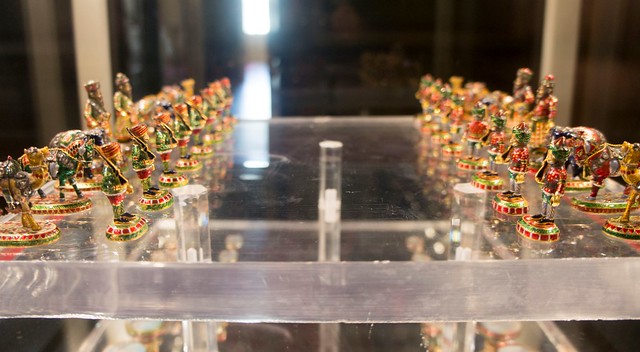
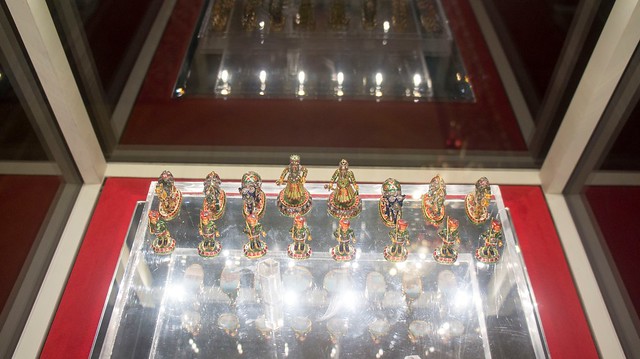
Here is the real and only King Farouk’s chess set as exhibited in Alexandria’s Royal Jewelry Museum.

King Farouk of Egypt's Chess set at Royal Jewelry Museum شطرنج الملك فاروق
The real chess set of King Farouk at the Royal Jewelry Museum 
Made gold and encrusted with gemstones, that chess set is another remarkable piece of art from the East.
King Farouk of Egypt's Chess set at Royal Jewelry Museum شطرنج الملك فاروق
It was a present of Shah of Iran Reza Pahlavi to King Farouk of Egypt and Sudan 
The chess set is model after Indian kings and fighters. Do you know that chess originated in India? Do you know that its name in Arabic Chaturang, directly comes from its original name in India “Chaturanga”?

Thursday, July 19, 2018

Once Again Jewelry of Egypt’s King Farouk go under the hammer : Lost Egyptian History

World-Famous Sotheby’s auctioned in London items that were once owned Egypt’s last King, King Farouk I in early June and once again there has been a complete silence on how those beautiful items that are part of the Egyptian National heritage found their way to the famous auction house.

The items were sold as part of Fine Jewels auction held earlier June.

Here is a quick look to the items previously owned by King Farouk that were sold in early June 2018

✽Lot No.199: Tie pin and cufflinks as well Ruby and diamond tie pin✽

There are tie pin and cufflinks made of 18-carat gold mounted with coins depicting young King Farouk of Egypt. The other tip pin in the lot is more beautiful.
The coins and the tie pins "Sotheby's"
It is decorated with the Egyptian kingdom’s crown set with calibré-cut rubies and single-cut diamonds.

The two tie pins and cufflinks were sold in their original green leather pouched stamped with the following in French “AH. Naguib Rey, Fournisseur de Sa Majsete’ Le Roi D’Egypt. Le Cairo-Paris” which is translated in to “A.H Naguib Rey {I think it Bey}, the fournisser of his Majesty King Farouk of Egypt {specialized in buying fancy stuff for the king}, Cairo and Paris.

AH. Naguib is Ahmed Naguib or as known in the Egyptian modern history Ahmed Pasha Naguib, King Farouk’s special Jeweler.

Historically, King Farouk I met his second wife Nariman at the Naguib Pasha’s Jewelry shop at Abdel Khalek Tharwet street in Cairo when she was searching with her family for engagement jewelry for her first engagement.

Interestingly, Ahmed Pasha Naguib used owned one of Presidency villas beside Heliopolis Palace where ousted Mubarak used to stay and there has been a battle between Naguib Pasha heirs and the state about it. That villa should return to them but what you know !!
The family of Naguib Pasha is still working in Jewelry business in Egypt.
Back to the auction.
Originally estimated at GBP 220-350, those two tie pins and cufflinks were sold for GBP 4,000 “ LE 95,825”
Sotheby's did not release online information related to how it acquired those items or when they were made.

Friday, June 29, 2018

Kodak Agfa Presents : Watches at Alexandria’s Royal Jewelry Museum

Egypt’s Royal Jewelry Museum got too many beautiful items and things that will make anyone blogger or journalist or photojournalist wonder which item or thing to post from it first.
Located in Alexandria, the museum got beautiful things to share whether its beautiful architecture or its history or its content from items that used to be owned by members of the Mohamed Ali Royal Family.
According to official statements, the Museum hosts 11,500 pieces or items previously owned by the members of the Mohamed Ali Royal Family that ruled Egypt from 1805 till 1952.
In May, Egyptian Chronicles presented a small post featuring the royal orders in the Museum.
Now, this post will feature a beautiful small collection of watches at that Museum.
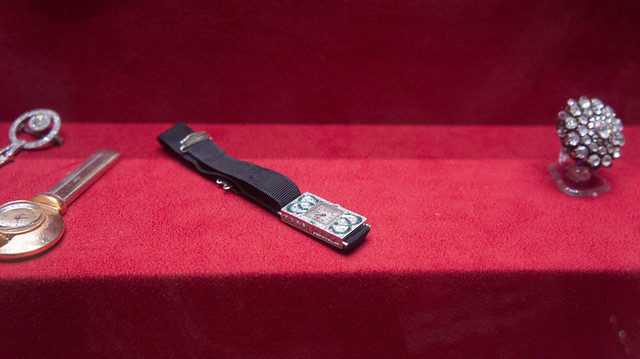
Like for example, this beautiful watch owned once by King Farouk’s first wife Queen Farida.

Queen Farida's diamond watch at Egypt's Royal Jewelry Museum
Queen Farida's watch
Despite its black strap, that watch is encrusted with diamonds and emeralds.
That watch overshadowed the other watch on the left made off the leather strap and big golden body.

If you remember one of King Farouk’s watches, a-Patek Philippe watch was sold in a Christie’s auction in Dubai in March for US$ 912,500 ( LE 16.3 Million) to a phone buyer.
Most of the watches owned by members of the Egyptian Royal family had a similar fate. The few survived and made it to that small museum in Alexandria.
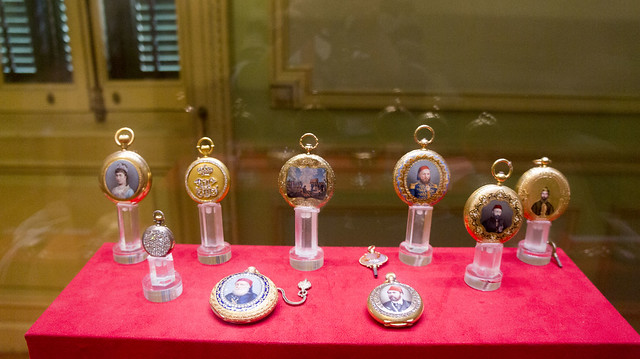
There are not too many wrist watches in the museum but there is a nice collection of gold pocket watches.
Golden pocket watches at Egypt's Royal Jewelry Museum
Golden pocket watches 

Some of those golden watches were made in the 19th century for a number of Egypt’s rulers and their wives.

Friday, May 18, 2018

Kodak Agfa Presents : The Royal Egyptian Orders and Medals at Alexandria's Royal Jewelry Museum

You have seen the exterior and the interior of Egypt’s Mohamed Ali Royal Family’s Jewelry Museum in Alexandria earlier this year.
I think it is time to explore its beautiful Jewelry and items inside it.
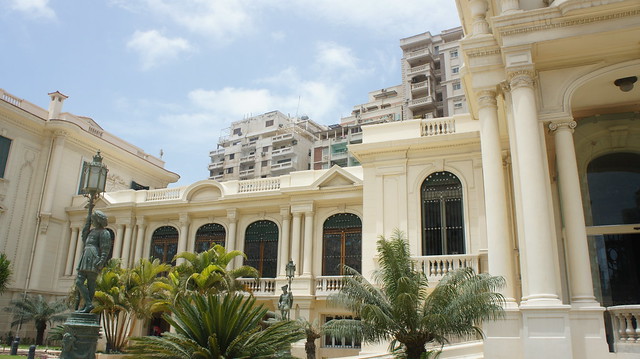
The Egyptian Royal Medals are exhibited in that beautiful gallery connecting the Eastern and Western wings of Fatimah Haider’s Summer Palace.
Fatima Haider's Palace's exterior
The Gallery between the Palace's East Wing and West Wing 
The gallery’s balconies feature amazing hand-painted stained glass showing romantic scenes from the Renaissance era.
Now to the exhibits of that gallery.

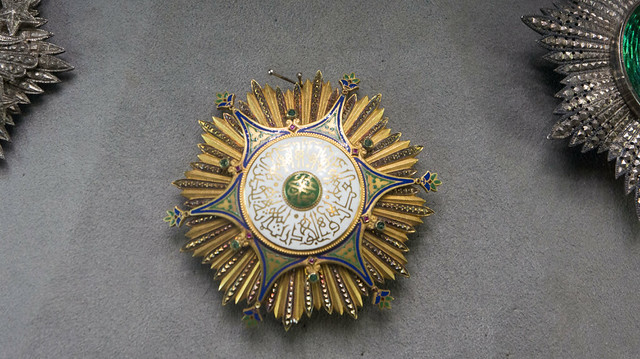
Egypt’s Order of Mohamed Ali


Egypt's Order of Mohamed Ali
The Order of Mohamed Ali 
Founded by Sultan Hussein Kamel in 1915 to honor the heads of states as well the members of the Egyptian and European Royal families.
The recipients were entitled “Pashas” and “Excellency”
Till the declaration of the Egyptian Republic in 1954, this was the highest order in Egypt.
It was replaced by the Order of the Nile which was also founded by Sultan Hussein Kamel.

Saturday, March 24, 2018

From a royal palace to a public school to a film studio : Sultana Melek’s Palace

Every time I pass by Heliopolis in Cairo, I must look around to see its remaining beautiful villas and palaces. One of my favorite palaces there is the Palace of Sultana Melek at Al-Oroba street which was turned in to a public school in the 1960s.
Sultana Melek's Palace
Sultana Meleks' palace with two strange banners
For decades the Heliopolis style building hosted Misr Gadida language school. In the time of elections, it turned in to a poll station, the President’s Polling station especially in the time of Mubarak.
From two weeks, I took a couple of photos of that beautiful building that was once the residence of Egypt’s only Sultana.
To my surprise, I found out that a big banner hanging on the building with the words “Qena police station” !!
What brought Qena police station of Upper Egypt to Cairo Heliopolis.
What was really strange to me was the fact that the Misr El-Gadida language school was still there !!!
I did not understand anything and I forgot to search what happened to the residence of that Turkish woman who became a Sultana for three years only.

A post shared by Zeinobia (@zeinobia) on


Only earlier Friday, I knew that the palace turned in to a public school has become a film studio recently and it is a location for popular actor Mohamed Ramadan’s TV series whose original setting is in Qena governorate, Upper Egypt.

Tuesday, March 13, 2018

Where have Mohamed Ali Royal Family’s treasures gone ? or the curious case of King Farouk's bedroom

And as Egyptians were watching the current Presidential elections race in early January to see who is going to the king for the next four years whom they know very well, they got busy unexpectedly with something from the bygone true Royal era.

In early January, someone shared on Twitter photos which Flickr user Islam Taha uploaded to his photostream in April 2011 showing a bedroom reportedly owned by King Farouk of Egypt. That bedroom is up for sale at a famous U.S based antiquities gallery.(12, 34,5, 6 )

King Farouk's bed and the two night stands "Rau antiquities"
The bed and the two night stands "Rau antiquities" 
A group of friends who launched #MasrZaman’s active hashtag about Egypt’s history and heritage began to discuss that tweet and photos remembering how the furniture and jewels of Mohamed Ali Royal were smuggled outside Egypt illegally.

That discussion brought to the attention that news from September 2013 about how King Farouk’s bedroom at his Royal Rest house in Giza zoo disappeared and was replaced by a cheap bedroom.

On 15 January, Cairo-based Al-Molid website published a news report reporting about that royal bedroom that appeared in the United States concluding that it was the same bedroom that disappeared in 2013.

In no time, the story went viral online and shared across the Egyptian social media universe to the level that the U.S antiquities company had to remove its King Farouk’s bedroom website page from its official website and its special video from its official YouTube Channel.

It was the talk of the town that soon faded like any other thing despite it opened a file that pop-ups in 2018: Where have Mohamed Ali Royal Family’s treasures gone?

A King in exile reminds the government of its role

The matter reached that former King Ahmed Fouad II of Egypt and Sudan issued a short official statement about the bedroom suite that hit hard in January